What Is an Offshore Pilot?
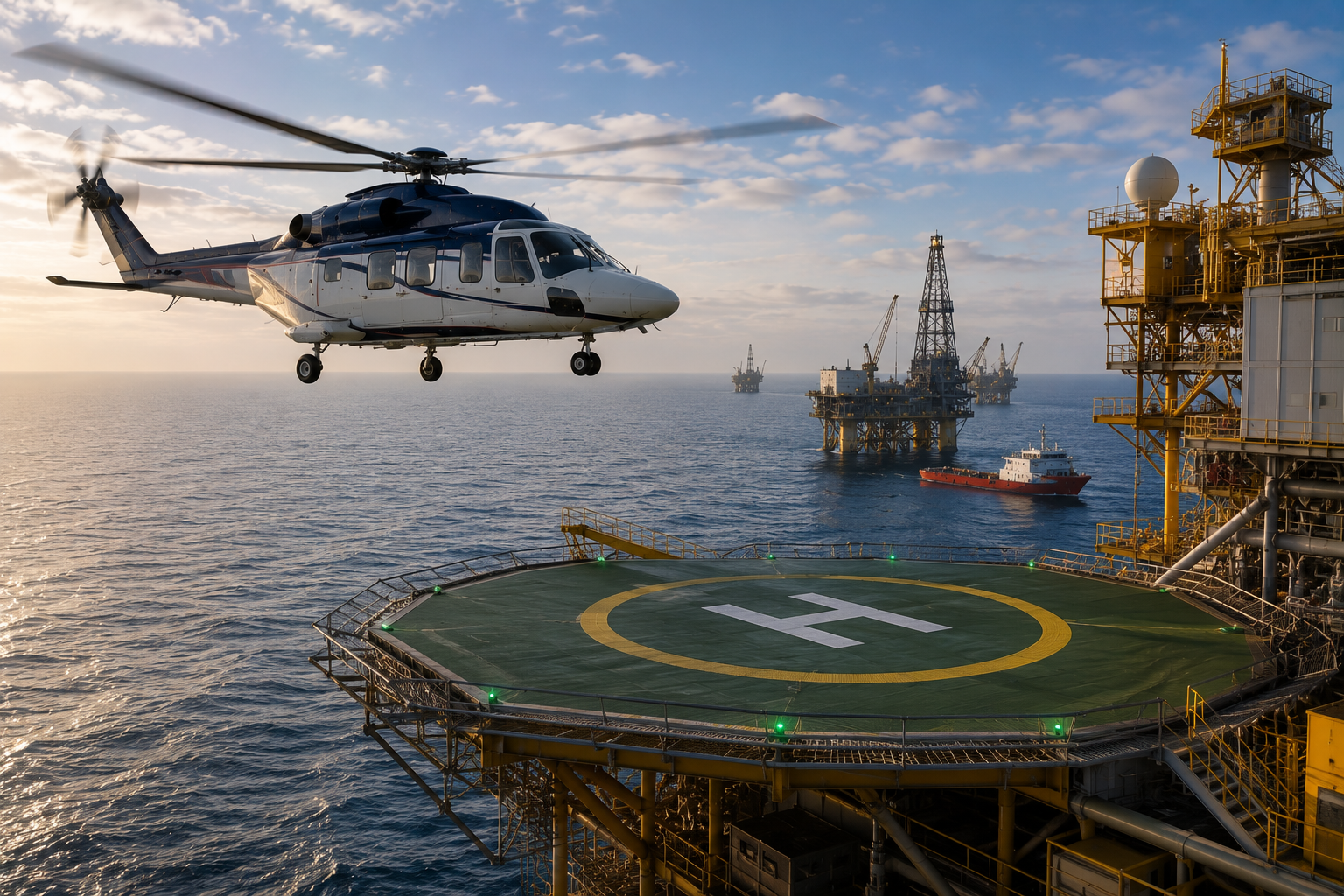
Offshore pilots transport workers, equipment, and supplies to offshore oil rigs, wind farms, and maritime platforms. Most offshore pilots fly helicopters over oceans and coastal waters.
These pilots are essential to the energy and maritime industries.
Roles and Responsibilities
Offshore pilots:
- Fly workers safely to offshore platforms
- Operate in changing weather conditions
- Conduct overwater navigation
- Monitor helicopter systems carefully
- Coordinate with offshore crews and dispatch
- Perform emergency preparedness procedures
Work Environment
Offshore pilots often work:
- Over oceans
- In coastal regions
- Around oil rigs and wind farms
- In changing weather conditions
Common aircraft include:
- Sikorsky S-92
- Airbus H175
- Leonardo AW139
- Bell 412
Expected Salary
Estimated salary ranges:
- Entry-level offshore pilot: $70,000–$120,000
- Experienced offshore captain: $150,000–$250,000+
Salary Sources:
- Helicopter Association International
- PHI Aviation Careers
- Bristow Group Careers
Education and Training
Most offshore pilots need:
- Commercial helicopter license
- Instrument helicopter rating
- Offshore survival training
- Extensive helicopter flight hours
- Advanced safety training
Notable Employers
- Bristow Group
- PHI Aviation
- CHC Helicopter
- Offshore energy companies
Notable People
Offshore aviation is highly specialized, and many professionals build careers behind the scenes supporting global energy infrastructure.
Why Students Choose This Career
Students may enjoy:
- Helicopter flying
- Maritime environments
- High salaries
- Specialized aviation work
- Adventure and technical flying
FAQs
Do offshore pilots fly helicopters?
Yes. Most offshore transportation is conducted using helicopters.
Is offshore flying difficult?
It requires advanced training and excellent weather judgment.
Do offshore pilots work rotational schedules?
Many do, often working several days on followed by several days off.
Ready to soar in your aviation career?